SPLINTERLANDS BASICS: TYPES OF CARDS AND HOW TO READ THEM

When a new player opens up the Splinterlands website, there are so many things to learn before grasping the skills to play the game. Splinterlands is a trading card game that uses plenty of different types of cards to play the game.
For new players, it is important to learn the basics of the game as it helps them gradually develop skills that improve their gaming experience.
The gameplay works with building a deck with a combination of cards, but if you know a card well, you'll be preparing a killer deck that may get you a nice amount of wins in the game, and winning the ranked battles means bagging some cool crypto and NFT rewards which help you grow your portfolio.

So, let's move on to understanding card basics, types of cards, and types of monsters and summoners.

Types of Cards in Splinterlands
Splinterlands game contains 2 types of cards i.e. 1) Summoner cards and 2) Monster cards.
Summoner cards are denoted with  'Blast or Magic' icon, while Monster cards are represented with
  a 'Bite or Teeth' icon.
What is a Summoner Card and How to Read It?
A summoner cannot fight in the battle but consider a leader of the pack from one of six Splinter types.
A summoner card is the first card to be chosen before the selection of playable monster cards. A summoner is a magically empowered card, that imbues all the monsters in a deck with special abilities that it possesses.
Example of a Summoner Card:
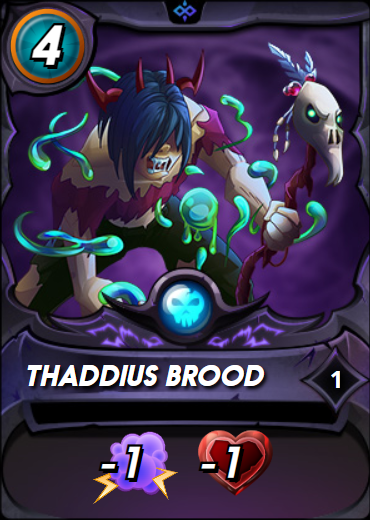
Let's break this card down further into parts to understand its specifications.

In Splinterlands every card has assigned a certain value of 'Mana', this value appears in a circle on the top left corner of the card.
In the middle of the card, you'll see the image of the summoner.
This icon represents the type of the Splinter or magic element and the color depicts the rarity of that card. We'll explore the Splinter and rarity types in the end.
This part shows A. Name of the Summoner, B. Level of the Summoner card, and C. Experience bar shows the progress to the next level.
At the bottom of the card, you'll find the different magical powers of a summoner. These powers grant special abilities to all friendly monsters and also enhance their stats. Some magical powers affect the stats of enemy monsters or curse them with negative status effects.
What is a Monster Card and How to Read It?
A monster card is a card that is used in a battle to perform certain actions based on their stats and abilities. Monster cards are selected based on the Splinter of the Summoner you have selected already.
Definition of a Monster: A monster can be any person, insect, bird, creature, or thing that can perform in a battle. A monster is also known as a 'unit'.
Example of a Monster Card:
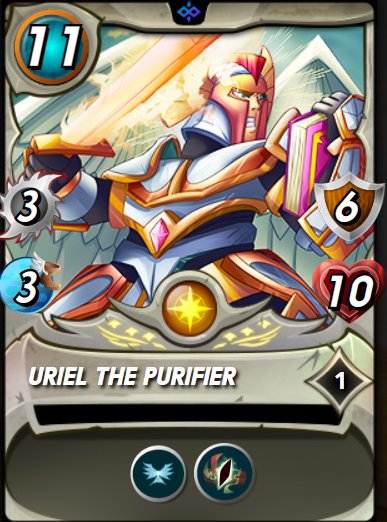
Unlike Summoner cards, monster cards come with the stats that help them fight in the battle.
Now, we'll break down the card into parts and find out its specifications.

On the top left of the card inside a circle, the figure is called 'Mana' cost of a card.
This icon depicts the attack type and the value of damage that a monster can deal to the enemy units.
This icon represents the armor and its toughness value, it protects a monster from melee and ranged attack types only.
This icon represents the speed of a monster, the speed ascertains the monster's attack initiative and also helps determine the evasion chances.
This heart-shaped icon depicts the monster's health, each time a monster is hit by an enemy unit, it will lose some health points depending on the damage dealt.
The icon in the middle represents the Splinter type, while the orange color denotes the rarity of the card.
This part of the card is similar to the summoner card as we saw above.
A. Name of the Card, B. Level of the Card, and C. Experience bar
This area of the card is allocated to show the abilities of a monster. These abilities give a monster special powers in a battle.
Splinter Types
There are six types of Splinters in Splinterlands, each Splinter represents a faction based on the monsters' habitat and association. Symbols of Splinters are shown below.
| Splinter Symbol | Description |
|---|---|

|
Fire Splinter |
 |
Water Splinter |
 |
Earth Splinter |
 |
Life Splinter |
 |
Death Splinter |
 |
Dragon |
Factionless Cards:

Cards that have a "Crossed-Swords" mascot instead of any Splinter symbol are known as factionless or neutral cards. These cards can be placed in a battle regardless of Splinter type under any summoner.
Rarity of Cards
There are 4 types of rarities in Splinterlands, the rarity determines a card's chances to be found in a chest or booster pack upon opening.
| Rarity Color | Description |
|---|---|

|
Grey = Common |

|
Blue = Rare |
 |
Purple = Epic |
 |
Orange/Gold = Legendary |
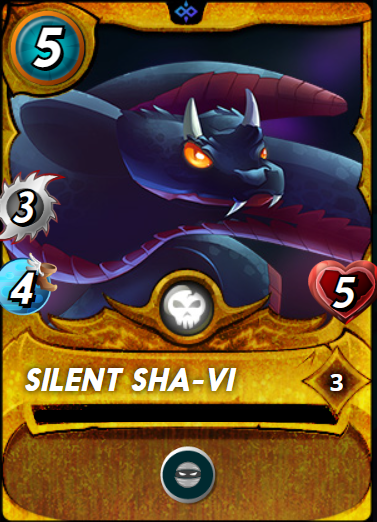
Gold Foil Cards
These are the rarer versions of regular cards, their appearance is the same as the regular cards except their frames are completely painted in gold color.
A gold foil card requires significantly fewer cards to level up than a regular card. Using a gold foil card in a ranked battle also enhances the R-share percentage to 10% per every gold foil card used.
Example of a Gold Foil Card:
I hope this tutorial will help you understand the types of cards and how to read them in the game. This is a basic guide for beginners and wannabe players to learn about common Splinterlands stuff. Knowing these little things can enhance your in-game experience and keep you more attentive in the battles to understand your opponent's cards and strategies.
Want to join Splinterlands Adventures, click the image to visit the game website:
Show your support in the comment section for my Splinterlands content.
https://twitter.com/maxisdx/status/1568711403153793026
The rewards earned on this comment will go directly to the people( @beeminer ) sharing the post on Twitter as long as they are registered with @poshtoken. Sign up at https://hiveposh.com.
This would definitely prove very useful for those that are starting on Splinterlands.
Great write up.
Thanks for the effort in putting this together for us. 😊
!1UP
This is my aim to at least prepare useful guides for new joiner or wannabe's to let them easily understand the game.
When I had started this game, it me months to take the grasp of the game, even youtube had not much information about basic principals of the game.
Thanks for being here and appreciating my friend.
!LUV
@lordshah(1/1) gave you LUV. tools | wallet | discord | community | <>< daily
HiveBuzz.me NFT for Peace
I face the same wall when I started.
You have received a 1UP from @thecuriousfool!
@monster-curator, @oneup-curator, @thg-curator
And they will bring !PIZZA 🍕.
Learn more about our delegation service to earn daily rewards. Join the Cartel on Discord.
PIZZA Holders sent $PIZZA tips in this post's comments:
@curation-cartel(1/20) tipped @lordshah (x1)
Learn more at https://hive.pizza.
Congratulations @lordshah! You have completed the following achievement on the Hive blockchain and have been rewarded with new badge(s):
Your next target is to reach 6000 upvotes.
Your next target is to reach 1250 replies.
You can view your badges on your board and compare yourself to others in the Ranking
If you no longer want to receive notifications, reply to this comment with the word
STOPCheck out the last post from @hivebuzz:
Support the HiveBuzz project. Vote for our proposal!
!PGM
!LOLZ
BUY AND STAKE THE PGM TO SEND A LOT OF TOKENS!
The tokens that the command sends are: 0.1 PGM-0.1 LVL-0.1 THGAMING-0.05 DEC-15 SBT-1 STARBITS-[0.00000001 BTC (SWAP.BTC) only if you have 2500 PGM in stake or more ]
5000 PGM IN STAKE = 2x rewards!
Discord
Support the curation account @ pgm-curator with a delegation 10 HP - 50 HP - 100 HP - 500 HP - 1000 HP
Get potential votes from @ pgm-curator by paying in PGM, here is a guide
I'm a bot, if you want a hand ask @ zottone444
lolztoken.com
I wasn't putting in enough shifts.
Credit: reddit
@lordshah, I sent you an $LOLZ on behalf of @entrepidus
@cryptoshots.nft 🔫 3D Shooter LIVE on Hive. Play and earn DOOM!!
(3/10)
Thanks for sharing! - @alokkumar121
